

If you find gold jewellery in Canada, you should not assume you can legally sell it simply because it is in your possession. The jewellery may still belong to someone else, and your responsibilities depend on the circumstances of the discovery and the applicable provincial or territorial laws. If you find a ring, necklace, bracelet, or other valuable item in a public place or private property, take reasonable steps to report it or return it to its rightful owner before considering any sale.
Finding gold jewellery can be exciting. A gold ring on a sidewalk, a bracelet left on public transport, or a necklace discovered in a park may appear to be a valuable item.
However, finding something and legally owning it are two different matters.
Before attempting to sell found gold jewellery in Toronto or elsewhere in Canada, it is important to understand the difference between lost property, abandoned property, and stolen property.
Can You Legally Sell Found Gold Jewellery in Canada?
There is no simple rule that makes every found item yours to sell.
If the jewellery belongs to another person, finding it does not automatically transfer ownership to you. The appropriate next step depends on where you found it, whether the owner can be identified, and the relevant local rules.
For example, jewellery found in a shopping centre, restaurant, hotel, workplace, or public transport system may be subject to the location's lost-property procedures.
If you find a valuable item on a street or in a park, contacting the local police or the relevant property authority may be appropriate.
In Ontario, the treatment of found property can depend on the circumstances. The province's laws address certain categories of property held by police, including property that has been found abandoned in a public place and whose owner cannot be identified. Those provisions do not mean that every person who finds an item automatically becomes its legal owner. (Ontario legislation)
The safest approach is to make reasonable efforts to return the jewellery or report it to the appropriate authority before attempting to sell it.
What Should You Do If You Find Gold Jewellery?
If you discover a ring, necklace, bracelet, or other valuable item, take a few practical steps.
1. Record Where You Found It
Make a note of the date, approximate time, and location.
This information may help the owner identify the item or help the relevant authority manage the report.
2. Check for Identifying Information
Look for a name, engraving, initials, or other details that could help identify the owner.
Avoid publishing every identifying detail publicly. Keeping some information private can help establish whether a person claiming the item is its rightful owner.
3. Contact the Relevant Property Authority
If you found the jewellery in a business, shopping centre, hotel, workplace, or on public transport, ask about its lost-property procedure.
For an item found in a public place, contact the appropriate local police service or authority for guidance.
4. Keep the Jewellery Safe
Until ownership is resolved, keep the item secure and avoid altering, selling, dismantling, or removing stones from it.
Taking these steps can help protect both the item and your position if the owner comes forward.
What Is the Difference Between Lost, Abandoned, and Stolen Jewellery?
These terms are not interchangeable.
Lost Jewellery
Lost jewellery is property that someone has unintentionally misplaced.
For example, a person may drop a gold ring while walking through downtown Toronto without realising it.
The fact that the owner cannot immediately be identified does not necessarily mean the jewellery has been abandoned.
Abandoned Jewellery
Abandoned property generally involves a different question: whether the owner has intentionally given up their ownership rights.
An item being left unattended is not, by itself, enough to establish that it has been abandoned. The circumstances matter.
Stolen Jewellery
Stolen jewellery is property taken without the owner's consent.
If you find an item that appears to have been stolen, contact the appropriate police service rather than attempting to sell it.
If you have any reason to believe the jewellery belongs to someone else, do not assume that possession gives you the right to dispose of it.
What If You Find Gold Jewellery in a Public Place in Toronto?
If you find jewellery on a Toronto street, in a park, or in another public location, consider contacting the Toronto Police Service or the relevant property authority for instructions.
Explain where the item was found and provide a description.
Do not assume that keeping the item for a particular number of days automatically makes it yours. Any applicable procedure can depend on the type of property and the circumstances.
For jewellery found inside a business, transit facility, or private venue, the organisation responsible for that location may have its own lost-property process.
Following the appropriate procedure is more sensible than trying to determine ownership on your own.
What If You Find Gold Jewellery in a House You Purchased or Rented?
Finding jewellery inside a property can create additional questions.
For example, you might discover a gold bracelet in a drawer after moving into a new home, or find a ring while cleaning a rental property.
The legal position may depend on the ownership history, the terms of the transaction or tenancy, and the circumstances in which the jewellery was left behind.
Do not assume that an item found inside a property automatically belongs to the current occupant or property owner.
Consider contacting the previous owner, landlord, property manager, or another relevant party. If ownership remains unclear, seek appropriate legal advice before selling the item.
Can a Gold Buyer Tell Whether Jewellery Was Found or Stolen?
A gold buyer can assess the jewellery's physical characteristics, but an evaluation of gold purity and weight does not establish legal ownership.
A buyer may examine:
- Gold purity
- Weight
- Hallmarks
- Construction
- Gemstones
- Condition
These checks help assess the item itself. They do not prove that the person presenting it has the legal right to sell it.
Depending on the circumstances and applicable requirements, a precious-metals dealer may also have identification, record-keeping, or reporting obligations.
This is why sellers should resolve ownership concerns before approaching a buyer.
Why You Should Not Sell Found Jewellery Before Establishing Ownership
Selling jewellery before ownership is resolved can create unnecessary legal and practical problems.
The rightful owner may later identify the item, particularly if it contains an engraving, distinctive design, or sentimental feature.
Selling it may also make the item more difficult to recover.
Instead, take reasonable steps to return the jewellery or report it. If the relevant authority later confirms that you are entitled to keep or dispose of the item, you can consider your options at that stage.
What If You Have Legally Acquired Gold Jewellery?
This is a different situation from simply finding an item.
If the jewellery is yours, or you have otherwise acquired the legal right to sell it, you can explore appropriate selling options.
Before selling, consider:
- Whether the jewellery is solid gold, hollow gold, or gold-filled
- Its gold purity and weight
- Whether it contains diamonds or other gemstones
- Whether it has collectible or resale value
- The buyer's evaluation process
- The offered price and transaction terms
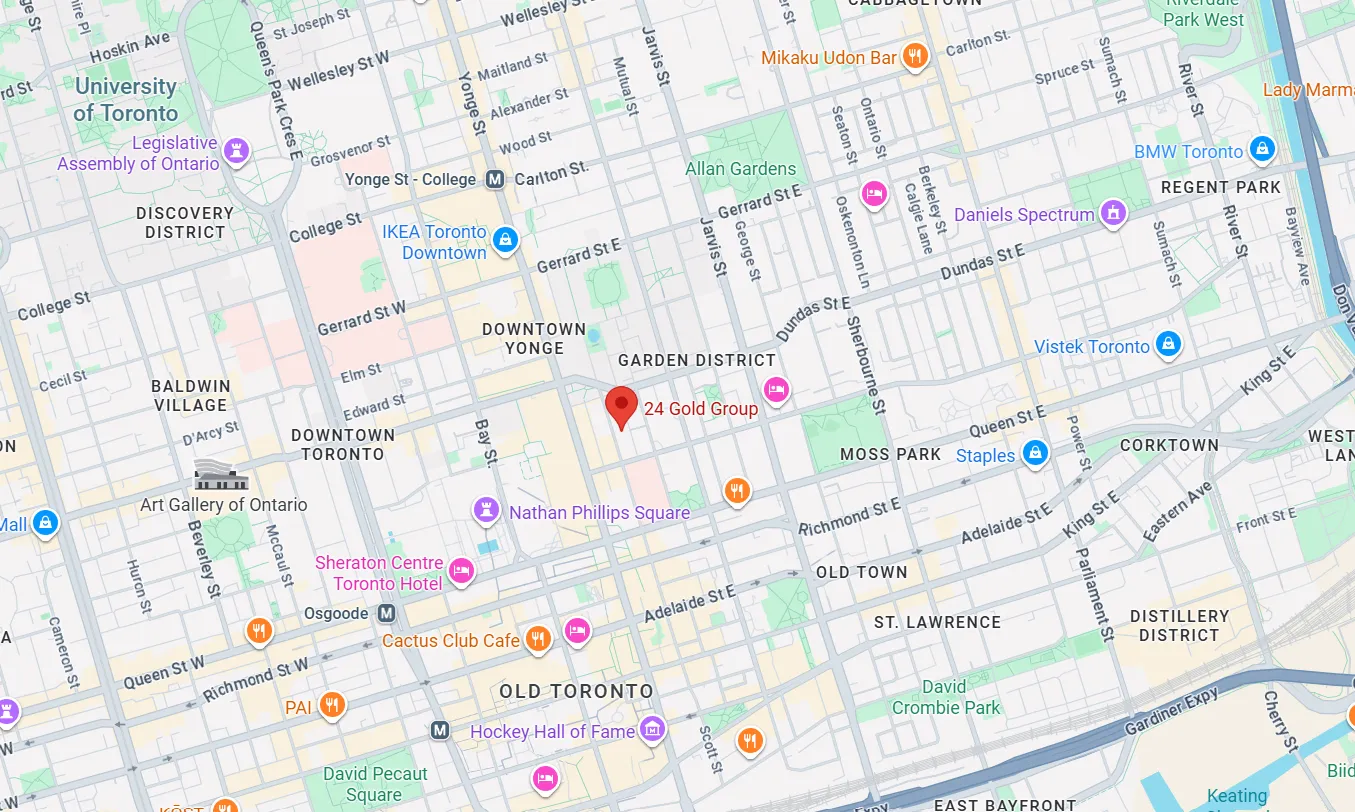
If you are in Toronto, 24 Gold Group Ltd. is one local precious-metals business you can contact to ask about its jewellery evaluation process and selling requirements.
Resolving ownership first helps ensure that the transaction is based on your legal right to sell the item.
Frequently Asked Questions
If I find a gold ring on the street in Canada, can I keep it?
Not automatically. Finding a ring does not by itself establish that you own it. The appropriate next step depends on the circumstances and applicable local rules. Consider reporting the item to the relevant authority.
Can I sell jewellery I found in Toronto?
Do not sell it simply because you found it. First take reasonable steps to identify the owner or report the item to the appropriate authority. You should establish that you have the legal right to dispose of it before attempting a sale.
What if nobody claims the jewellery?
The absence of an immediate claim does not automatically transfer ownership to the finder. Follow the applicable lost-property procedure and obtain guidance from the relevant authority.
What if I find gold jewellery in a store or shopping centre?
Notify the store or property management team and follow its lost-property process. The business may be able to reunite the item with its owner.
Can I sell jewellery left behind by a previous tenant?
Do not assume that abandoned-looking property belongs to you. The appropriate steps may depend on the tenancy, ownership, and circumstances. Contact the landlord or property manager and seek legal guidance if necessary.
Does a gold buyer verify legal ownership?
A gold buyer can assess the metal, but that does not necessarily establish who owns the item. Dealers may have their own procedures and applicable compliance obligations. Sellers should ensure they have the legal right to sell the jewellery.
Resolve Ownership Before Selling Gold Jewellery
Finding gold jewellery does not automatically give you the right to sell it. The distinction between lost, abandoned, and stolen property matters, and the appropriate process depends on the circumstances and applicable laws.
If you find jewellery in Toronto, record where it was found, keep it safe, and contact the appropriate property authority or police service for guidance. Avoid selling or altering the item until ownership has been resolved.
Once you have established that you are legally entitled to sell jewellery, 24 Gold Group Ltd. can be one of the Toronto-area precious-metals businesses you contact to ask about the evaluation process.
Taking the right steps first can help protect the rightful owner and prevent avoidable problems later.

 24 Gold Group Ltd.
 Business hours:
 Phone:
 Email: