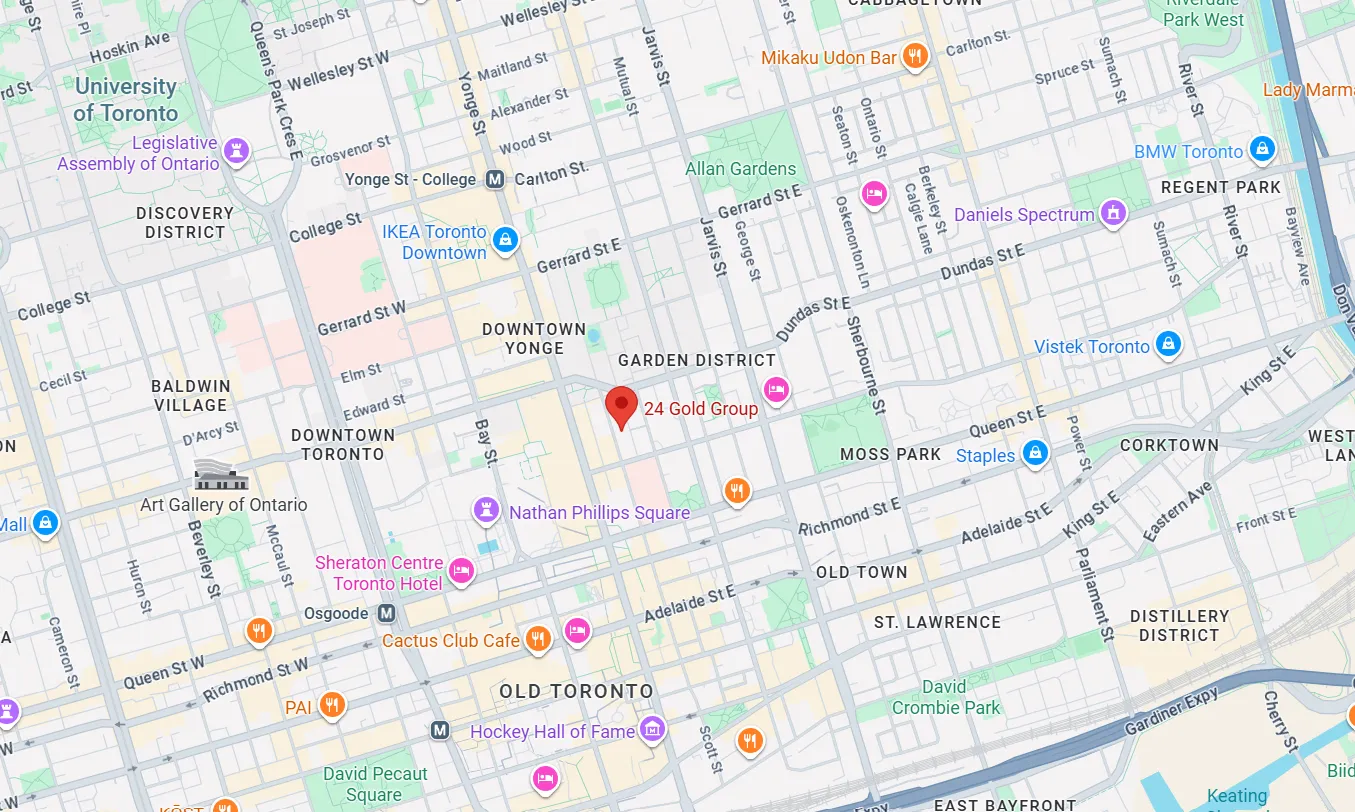


If you are planning to sell gold in Toronto, you may have questions about identification requirements.
Do you need government-issued ID to sell gold? Does the $10,000 threshold apply to every gold transaction? Can you sell gold without providing identification if the transaction is below $10,000?
The answer depends on the circumstances of the transaction.
Canada has anti-money-laundering and anti-terrorist-financing requirements that apply to certain businesses, including dealers in precious metals and precious stones. The Financial Transactions and Reports Analysis Centre of Canada (FINTRAC) sets requirements for businesses covered by this framework.
For Toronto customers selling gold jewellery, coins, bullion, or other precious-metal items, understanding these requirements can make the process easier and less confusing.
What Is FINTRAC?
FINTRAC is Canada's financial intelligence unit and the regulator responsible for supervising certain businesses under Canada's anti-money-laundering and anti-terrorist-financing framework.
Dealers in precious metals and precious stones can be subject to FINTRAC requirements when they meet the applicable conditions.
These requirements are designed to help prevent businesses from being used to facilitate money laundering or terrorist financing.
For customers, this can mean that a gold buyer in Toronto may ask for identification or other information during certain transactions.
Being asked for ID does not necessarily mean there is anything wrong with the transaction. In many cases, it is simply part of the dealer's compliance responsibilities.
Do You Need ID to Sell Gold in Canada?
Not necessarily for every transaction.
FINTRAC's guidance says dealers in precious metals and precious stones must verify the identity of clients in specific circumstances, including:
Large cash transactions
Large virtual-currency transactions
Suspicious transactions
For a large cash transaction, the dealer must verify the identity of the person or entity from which it receives $10,000 or more in cash when the transaction takes place, subject to the applicable 24-hour rule.
This means there is no blanket rule saying that every person selling gold in Canada must show ID regardless of the transaction.
The circumstances matter.
What Does the $10,000 FINTRAC Rule Mean?
The $10,000 threshold is frequently misunderstood.
It does not simply mean:
"If your gold is worth more than $10,000, you automatically need ID."
For dealers in precious metals and precious stones, the relevant large-cash rule concerns receiving $10,000 or more in cash in a transaction, subject to the 24-hour rule.
For example, if you sell gold to a dealer and receive $12,000 in cash, the dealer's large-cash transaction obligations may apply.
The method of payment therefore matters.
Other FINTRAC requirements can apply in different circumstances, so the $10,000 threshold should not be treated as the only situation in which identification may be required.
What Is the FINTRAC 24-Hour Rule?
The 24-hour rule is another important part of the reporting framework.
It is designed to prevent qualifying transactions from being divided into smaller amounts simply to remain below a reporting threshold.
FINTRAC states that transactions of the same type may need to be aggregated when they:
Occur within a consecutive 24-hour period
Meet the applicable aggregation conditions
Together total $10,000 or more
The rule can apply to transactions both below and above $10,000 when the applicable conditions are met.
A Simple Example
Imagine a customer completes two qualifying cash transactions with a dealer:
Transaction 1: $6,000
Transaction 2: $5,000
If the transactions meet the applicable aggregation conditions within a consecutive 24-hour period, the combined amount is $11,000.
The dealer may therefore have large cash transaction reporting and identification obligations.
This is why deliberately splitting transactions into smaller amounts does not necessarily avoid FINTRAC requirements.
Does the $10,000 Rule Apply to the Value of the Gold?
Not in the simple way many people assume.
The important consideration is the cash received by the dealer, rather than simply the value of the gold involved.
FINTRAC specifically requires dealers in precious metals and precious stones to verify the identity of every person or entity from which they receive $10,000 or more in cash, subject to the 24-hour rule.
For example, suppose you sell gold jewellery valued at $12,000.
The compliance requirements can differ depending on whether the transaction involves cash or another payment method.
That is why it is better to ask the dealer about the identification requirements for your particular transaction rather than assuming the $10,000 figure applies universally.
Can You Sell Gold Under $10,000 Without ID?
A transaction below $10,000 does not automatically mean that identification can never be requested.
FINTRAC's guidance identifies several situations in which identity verification can be required.
One important example is a suspicious transaction.
Dealers must take reasonable measures to verify the identity of a person or entity conducting or attempting to conduct a suspicious transaction, regardless of the transaction amount.
Other compliance and record-keeping requirements can also affect what information a dealer needs.
Therefore, it is better to think of $10,000 as an important threshold for certain large cash requirements, not as a universal "ID or no ID" line.
Why Might a Toronto Gold Buyer Ask for Your ID?
If you visit a gold buyer in Toronto and are asked for identification, there are several possible reasons.
The request may be related to:
A large cash transaction
The 24-hour rule
A suspicious transaction
Other applicable FINTRAC requirements
The dealer's compliance procedures
A request for identification is not automatically an indication that you are suspected of criminal activity.
For a legitimate customer, providing identification may simply be part of completing a transaction that falls within applicable compliance requirements.
What Information May Be Collected?
When identification or transaction records are required, the information collected can be more detailed than a simple name.
FINTRAC's requirements for large cash transaction records can include information such as:
Name
Address
Date of birth
Occupation or principal business
Date of the transaction
Amount and type of cash
Method by which the cash was received
Information about the precious metals, precious stones, or jewellery involved
Purpose of the transaction
The exact information required depends on the circumstances and the applicable record-keeping requirements.
This is why a professional gold buyer may ask several questions when processing a qualifying transaction.
What Happens When You Sell Gold for Cash?
If a qualifying transaction involves $10,000 or more in cash, a dealer may have obligations to:
1. Verify your identity.
2. Create the required transaction records.
3. Report the transaction to FINTRAC.
4. Apply the 24-hour rule where applicable.
FINTRAC states that a large cash transaction record applies when a reporting entity receives $10,000 or more in cash in a single transaction.
The reporting requirement is the dealer's responsibility. Customers generally do not need to submit the report themselves.
What Is a Large Cash Transaction Report?
A Large Cash Transaction Report (LCTR) is a report that certain reporting entities submit to FINTRAC when they receive $10,000 or more in cash under the applicable rules.
For dealers in precious metals and precious stones, the report can contain information about the transaction, the people involved, the cash received, and the precious metals or jewellery involved.
If multiple qualifying transactions must be aggregated under the 24-hour rule, those transactions may also need to be reported according to FINTRAC's requirements.
What If the Transaction Is Suspicious?
The $10,000 threshold is not the only situation that matters.
FINTRAC requires dealers to take reasonable measures to verify the identity of a person or entity that conducts or attempts to conduct a suspicious transaction, regardless of the transaction amount.
This means a transaction worth less than $10,000 can still result in identity-verification requirements if the applicable circumstances are present.
It also means that customers should not assume that keeping a transaction below $10,000 automatically removes all FINTRAC-related requirements.
Does This Apply to Gold Jewellery?
Yes, dealers in precious metals and precious stones can fall under FINTRAC's framework when the applicable conditions are met.
FINTRAC defines jewellery to include objects made of materials such as gold, silver, palladium, platinum, pearls, or precious stones that are intended to be worn as personal adornment.
This means the rules can be relevant when customers sell certain types of gold jewellery, as well as other precious-metal products.
What Should You Bring When Selling Gold in Toronto?
If you are planning to visit a gold buyer in Toronto, it can be helpful to prepare in advance.
Bring Your Gold Items
Bring the jewellery, coins, bullion, or other precious-metal items you want to have evaluated.
Bring Government-Issued Identification
If your transaction requires identity verification, appropriate identification may be needed.
Even if you are unsure whether ID will be required, bringing it can help avoid unnecessary delays.
Bring Supporting Documentation
If you have certificates, receipts, assay information, or original packaging for certain coins or bullion products, keep these documents available.
Ask Questions
If a dealer requests identification or other information, you can ask how it relates to the transaction and the applicable compliance process.
A professional dealer should be able to explain the process clearly.
What Toronto Sellers Should Know About the 24-Hour Rule
One of the most important things for customers to understand is that the 24-hour rule is not simply about one transaction.
FINTRAC requires applicable transactions to be aggregated when they meet the relevant conditions within a consecutive 24-hour period and reach the applicable reporting threshold.
For this reason, attempting to structure transactions around the $10,000 threshold may create additional compliance concerns.
FINTRAC specifically identifies the splitting of cash payments as a potential risk indicator in the precious-metals sector.
The practical takeaway is simple: do not assume that dividing a larger transaction into smaller cash amounts will eliminate reporting or identification requirements.
How 24 Gold Group Ltd. Fits Into the Gold-Selling Process
If you are looking for a gold buyer in Toronto, understanding FINTRAC requirements can help you know what to expect before completing a transaction.
24 Gold Group Ltd. provides Toronto-area customers with an option for buying and selling precious metals.
Depending on the circumstances of a transaction, customers may be asked to provide identification or other information as part of applicable compliance procedures.
If you are unsure why information is being requested, it is reasonable to ask questions about the process.
A professional precious-metals transaction should be based on clear communication, appropriate evaluation, and compliance with applicable requirements.
FINTRAC Gold Rules: Common Myths and Facts
Myth: You always need ID to sell gold.
Fact: Identification requirements depend on the transaction and applicable circumstances.
Myth: Every gold transaction over $10,000 requires ID.
Fact: The $10,000 threshold specifically relates to certain large cash transactions; other circumstances can trigger identification requirements.
Myth: Transactions under $10,000 are never subject to FINTRAC requirements.
Fact: Suspicious transactions can require identity verification regardless of the amount.
Myth: Splitting a transaction into smaller cash payments avoids reporting.
Fact: Qualifying transactions can be aggregated under the 24-hour rule.
Myth: FINTRAC is a certification for gold dealers.
Fact: FINTRAC is a regulator; its framework establishes compliance and reporting obligations for applicable businesses.
Myth: Being asked for ID means the dealer suspects you of wrongdoing.
Fact: Identification can be a routine part of complying with applicable requirements.
Frequently Asked Questions About Selling Gold in Toronto
Do I need ID to sell gold in Toronto?
Not necessarily for every transaction. However, dealers in precious metals and precious stones must verify identity in certain circumstances, including applicable large cash transactions of $10,000 or more and suspicious transactions.
Can I sell gold for less than $10,000 without ID?
You may not need to provide ID solely because of the large-cash threshold, but other circumstances can trigger identity-verification requirements. A dealer may also have compliance procedures that require additional information.
What happens if I sell more than $10,000 of gold?
It depends on the circumstances and payment method. If a dealer receives $10,000 or more in cash in a qualifying transaction, large cash transaction requirements can apply, including identity verification and reporting.
Does FINTRAC apply to gold jewellery?
Dealers in precious metals and precious stones can be subject to FINTRAC requirements when applicable. The framework covers certain transactions involving precious metals, precious stones, and jewellery.
What is the FINTRAC 24-hour rule?
The 24-hour rule can require qualifying transactions of the same type to be aggregated when they occur within a consecutive 24-hour period and together reach $10,000 or more.
Why is a gold buyer asking for my ID?
The request may be necessary because of a large cash transaction, a suspicious transaction, another applicable requirement, or the dealer's compliance procedures. It does not automatically mean that you have done anything wrong.
Can I split a gold sale into smaller transactions to stay below $10,000?
You should not assume that splitting transactions will avoid FINTRAC requirements. Qualifying transactions can be aggregated under the 24-hour rule, and attempts to structure cash transactions to avoid reporting can raise compliance concerns.
Does 24 Gold Group Ltd. require identification?
Identification requirements can depend on the circumstances of a particular transaction and applicable compliance requirements. If identification is requested, customers can ask the team at 24 Gold Group Ltd. about the process and why the information is needed.
Know What to Expect When Selling Gold in Toronto
FINTRAC requirements can sound complicated, but the central point is straightforward: you do not automatically need to show ID every time you buy or sell gold in Canada.
For dealers in precious metals and precious stones, identity verification is required in specific circumstances, including qualifying large cash transactions of $10,000 or more, subject to the 24-hour rule, as well as suspicious transactions regardless of amount.
If you are planning to sell gold in Toronto, understanding these rules can make the process more predictable.
Whether you are selling old gold jewellery, broken pieces, coins, bullion, or other eligible precious-metal items, choose a professional buyer, ask questions about the evaluation process, and understand why identification or other information may be requested.
24 Gold Group Ltd. serves Toronto-area customers looking to buy or sell precious metals. Knowing what to expect before your visit can help you approach the transaction with greater confidence and clarity.
This article is for general educational purposes only and is not legal, tax, or financial advice. FINTRAC requirements can depend on the specific facts and circumstances of a transaction. For the most current requirements, consult FINTRAC or a qualified professional.

 24 Gold Group Ltd.
 Business hours:
 Phone:
 Email: