

Gold is once again at the centre of an important global financial story.
Between March and August 2026, De Nederlandsche Bank (DNB), the central bank of the Netherlands, transferred approximately 86 tonnes of gold from holdings in the United States and Canada to London. DNB said the move was intended to improve the liquidity and tradability of its gold reserves and strengthen its preparedness for severe crises.
The decision has attracted attention because it involves a significant amount of physical gold and changes where a portion of a country's official reserves is stored.
For investors following the gold market in Toronto, the development offers an opportunity to look beyond the headline and understand why central banks care about gold's location, accessibility, liquidity, and role as a reserve asset.
What Happened to the Netherlands' Gold?
The Netherlands did not sell 86 tonnes of gold and reduce its overall gold reserves.
Instead, DNB changed the geographical distribution of its holdings.
At the end of 2025, the Netherlands held approximately 612.4 tonnes of gold, which DNB valued at about €72.2 billion at that time. Its gold reserves had traditionally been distributed between the Netherlands, the United States, Canada, and the United Kingdom.
Between March and August 2026, approximately 86 tonnes were moved from the gold previously held in New York and Ottawa to London.
Following the relocation:
London's share increased from approximately 18.1% to 32.1%
New York's share declined from 31.3% to 18.5%
Ottawa's share declined from 19.7% to 18.5%
Approximately 30.8% remained in the Netherlands
The figures show that the move was a rebalancing of reserves, rather than a complete withdrawal from North America.
Why Did the Dutch Central Bank Move the Gold?
DNB linked the decision to increasing geopolitical unrest and the need to strengthen its crisis preparedness.
One of the central considerations was how quickly the gold could be accessed and traded if it became necessary during a severe crisis.
DNB considers London a major global centre for physical gold trading. According to the central bank, gold held there can be traded and deployed more quickly than gold held in New York or Ottawa.
The decision therefore appears to be primarily about:
Liquidity
Tradability
Accessibility
Geographic diversification
Crisis preparedness
Risk management
This distinction is important. The move should not automatically be interpreted as a statement that gold held in the United States or Canada is unsafe.
Instead, DNB has adjusted the location of part of its reserves to make them more readily available if circumstances require it.
Why Is London Important to the Global Gold Market?
London plays a major role in the international physical gold market.
For a central bank managing hundreds of tonnes of gold, storage location can influence how quickly its holdings can be mobilised.
DNB specifically said that gold held with the Bank of England must meet modern international trade standards and is considered highly tradable. This makes London an attractive location when the objective is to have reserves that can be deployed quickly.
This is an important concept for private investors as well.
Gold may be a globally recognised asset, but liquidity still matters. Owning a precious metal and being able to sell or trade it efficiently are two different considerations.
How Was 86 Tonnes of Gold Moved?
Moving 86 tonnes of physical gold internationally is not as simple as transporting every bar from one vault to another.
DNB used a combination of transactions and physical transfers.
Approximately 59 tonnes were sold in New York and repurchased in London. This allowed DNB to shift the location of that gold exposure without physically transporting the same bars across the Atlantic.
More than 27 tonnes were physically moved from the United States and Canada to DNB's facility in Zeist, Netherlands. An equivalent quantity was then moved from Zeist to London. DNB said this approach avoided the need to melt down bars and helped spread the risks associated with transporting such a large amount of gold.
The process highlights how sophisticated the international bullion market is.
Physical gold can be transferred through a combination of trading, logistics, vaulting, and established market infrastructure.
Does the Move Mean the Netherlands Is Losing Confidence in the United States?
That conclusion would be too simplistic.
DNB has not announced that it is removing all of its gold from the United States or Canada.
After the relocation, New York and Ottawa each account for approximately 18.5% of the Netherlands' gold reserves. The Netherlands itself continues to hold approximately 30.8%, while London's share has become the largest single location at 32.1%.
The more reasonable interpretation is that the Netherlands is seeking a more balanced distribution of its reserves while increasing the amount held in a location where the gold can be traded more readily.
It is a risk-management decision rather than evidence of a complete change in the country's relationship with North American financial markets.
What Does the Dutch Gold Move Say About Central Banks?
The decision highlights the strategic role that gold continues to play in central-bank reserve management.
DNB described gold as an important reserve asset and said that increasing its tradability strengthens its ability to respond during a severe crisis.
For central banks, gold can provide characteristics that differ from traditional financial assets.
It is:
Physically tangible
Globally recognised
Traded internationally
Not dependent on the creditworthiness of one private issuer
Held as part of official reserves by many central banks
That does not mean gold is risk-free or that its price can only move upward. Gold prices fluctuate, and central banks manage their reserves according to their own financial and strategic objectives.
The Dutch decision simply demonstrates that gold remains an important part of those calculations.
What Does This Mean for Gold Investors?
A central bank moving 86 tonnes of gold does not automatically mean that individual investors should buy gold.
Gold prices are influenced by many factors, including:
Interest rates
Inflation expectations
Currency movements
Central-bank activity
Investor demand
Geopolitical developments
Global economic conditions
Supply and demand
However, the Dutch decision can provide useful context for investors who are researching physical gold.
It demonstrates that gold's value to a reserve manager is not based solely on its market price. Location, liquidity, accessibility, and diversification also matter.
For someone considering buying gold in Toronto, understanding these broader factors can provide a better foundation for evaluating physical bullion.
Why Physical Gold Still Matters
The Dutch decision also brings attention to the difference between owning exposure to gold and owning physical gold.
Central banks maintain physical reserves because the metal itself has a unique role within the international financial system.
Private investors can also purchase physical forms such as:
Gold coins
Gold bars
Silver coins
Silver bars
Other recognised bullion products
The appropriate choice depends on the individual's objectives, budget, investment approach, and risk considerations.
Physical precious metals also introduce practical considerations such as storage, insurance, liquidity, premiums, and resale options.
These factors should be considered alongside the underlying metal price.
What Can Toronto Gold Buyers Learn From the Decision?
1. Gold Is a Global Market
The decision involved gold moving between the United States, Canada, the Netherlands, and the United Kingdom.
This illustrates how interconnected the physical gold market is.
A person buying gold in Toronto is participating in a market influenced by financial centres and institutions around the world.
2. Liquidity Matters
DNB's decision was partly driven by the desire to make its gold more readily tradable.
Private buyers should also consider liquidity when selecting bullion products.
Recognised coins and bars from established mints and refiners may be easier to identify and resell than obscure or poorly documented products.
3. Storage Is Part of Gold Ownership
For central banks, vault location is a strategic decision.
For individuals, storage is also important.
Anyone purchasing physical gold should consider where it will be stored, how securely it will be protected, and how easily it could be accessed if the owner decides to sell.
4. Diversification Can Involve More Than Different Assets
Diversification does not always mean owning stocks, bonds, cash, and precious metals.
The Dutch example shows that geographical diversification can also matter when managing physical assets.
What Does This Mean for the Canadian Gold Market?
Canada is directly connected to the story because Ottawa was one of the locations from which DNB moved gold.
However, the relocation should not be interpreted as a rejection of Canada's bullion infrastructure.
DNB continues to hold gold in Ottawa after the move, with Canada's share of its reserves now approximately equal to New York's at 18.5%.
For Canadian investors, the more relevant takeaway is that the gold market operates internationally.
Gold purchased in Toronto is connected to a global network of refiners, mints, dealers, financial institutions, vaults, and trading markets.
That is one reason it is useful for buyers to understand not only the gold price but also the product, purity, premium, authentication, storage, and resale considerations involved in owning physical bullion.
What Should You Consider Before Buying Gold in Toronto?
If the Dutch decision has increased your interest in physical gold, take the opportunity to research your options carefully.
Before purchasing bullion, consider:
Product Type
Understand whether you are buying a gold bar, coin, or another form of bullion.
Purity
Check the stated purity of the product and the identity of the mint or refiner.
Premium
Compare the product's price with the underlying gold market value and understand the premium being charged.
Authenticity
Purchase from an established source and understand how the product's authenticity is verified.
Storage
Decide how and where you will securely store physical precious metals.
Resale
Consider how easily the product could potentially be sold in the future and understand the dealer's applicable buy-back policies.
Taking these steps can help you make a more informed decision rather than reacting to a single market headline.
How 24 Gold Group Ltd. Fits Into the Toronto Gold Market
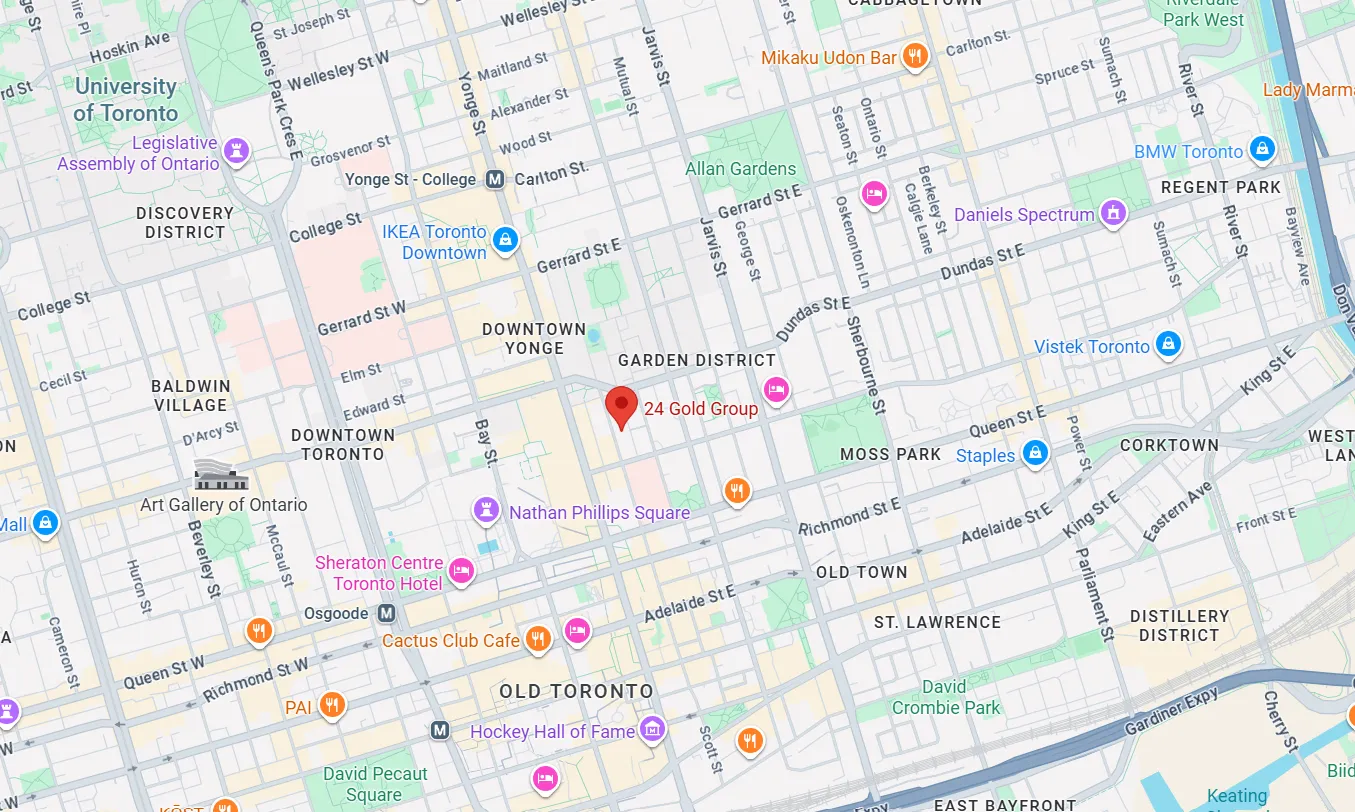
For Toronto-area customers researching physical precious metals, 24 Gold Group Ltd. provides a local option for buying and selling precious metals.
Whether you are interested in gold bullion, silver bullion, or other precious-metal products, understanding the factors that influence value can help you approach the market with greater confidence.
The Dutch central bank's decision provides a useful reminder that gold is more than a commodity whose price changes from day to day. For major institutions, its liquidity, tradability, accessibility, and role as a reserve asset are also important considerations.
For individual buyers, those same concepts can translate into practical questions about product selection, authentication, storage, premiums, and resale.
Frequently Asked Questions About the Dutch Gold Move
Why did the Netherlands move 86 tonnes of gold?
De Nederlandsche Bank moved approximately 86 tonnes of gold from holdings in the United States and Canada to London between March and August 2026. DNB said the move was intended to improve the liquidity and tradability of its reserves and strengthen crisis preparedness.
Did the Netherlands sell its gold?
Not in the sense of reducing its overall gold reserves. DNB changed where part of its gold was held. Approximately 59 tonnes were sold in New York and repurchased in London, while more than 27 tonnes were physically transferred through the Netherlands.
Why did the Netherlands choose London?
DNB considers London a major centre for physical gold trading and said gold held there can be deployed more quickly during a crisis than gold held in New York or Ottawa.
How much gold does the Netherlands have?
The Netherlands held approximately 612.4 tonnes of gold at the end of 2025. DNB valued those reserves at approximately €72.2 billion at year-end 2025.
Does the Dutch decision mean gold prices will increase?
Not necessarily. The relocation itself does not determine the direction of gold prices. Prices are influenced by a wide range of economic, financial, geopolitical, and market factors.
What does this mean for Toronto gold investors?
The decision reinforces the importance of gold as a strategic asset while highlighting the importance of liquidity, accessibility, storage, and diversification. It does not, by itself, indicate that Toronto investors should buy or sell gold.
Should I buy gold because central banks hold it?
Central-bank activity can provide useful insight into the role of gold within the global financial system, but it should not be treated as an automatic investment recommendation. Individual investors should consider their own objectives, risk tolerance, and financial circumstances.
What the Dutch Gold Move Tells Us About Today's Gold Market
The Netherlands' decision to move approximately 86 tonnes of gold to London is significant, but perhaps not for the reason the headline initially suggests.
The country did not abandon its gold reserves or completely withdraw from North American storage. Instead, DNB changed the distribution of its holdings to improve tradability, liquidity, accessibility, and crisis preparedness.
For Toronto investors, the broader lesson is that gold's role extends well beyond its daily market price.
Central banks continue to consider how much gold they hold, where it is stored, how quickly it can be accessed, and how it fits into their broader reserve strategies.
For anyone considering physical gold in Toronto, that makes education and due diligence especially important.
Whether you are buying your first gold coin, considering bullion bars, or simply following developments in the global gold market, understanding the forces behind the headlines can help you make more informed decisions.
24 Gold Group Ltd. can be part of that process for Toronto-area customers exploring the precious-metals market.
The Dutch may have moved 86 tonnes of gold, but the bigger story is about something much broader: in an uncertain world, the location, liquidity, and accessibility of physical assets can matter almost as much as ownership itself.

 24 Gold Group Ltd.
 Business hours:
 Phone:
 Email: